
Can rescued breweries survive?
Audio Description
Login here to listen to the audio description
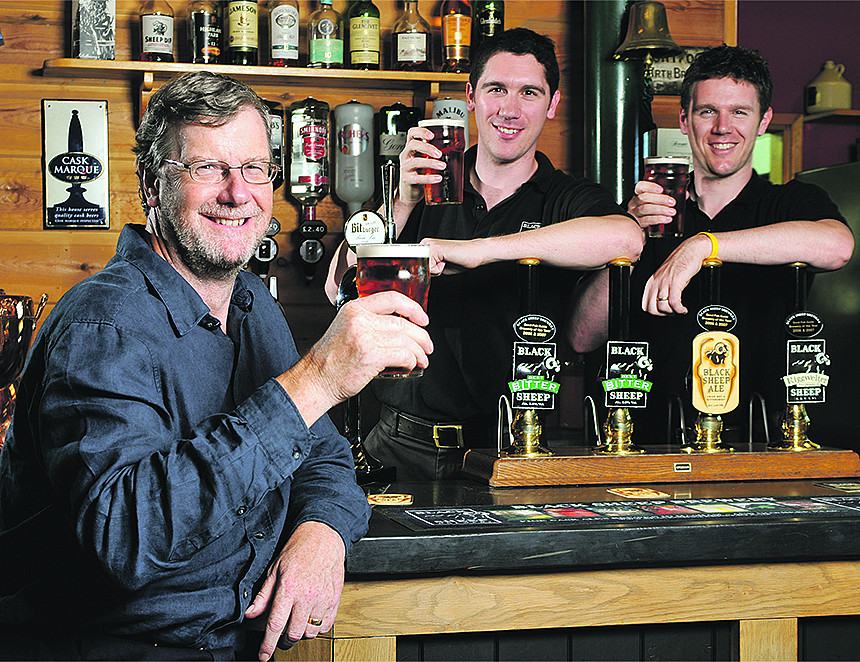
A major consolidation in the brewing industry has seen such key players as Black Sheep and Purity saved from administration and possible closure.
The two breweries, along with Brick, Brew by Numbers, North, Magic Rock and Fourpure, have been bought by the newly created Great British Drinks Company for £6.5m. The breweries were owned by Keystone, which has twice filed notice of intent to go into administration.
The Great British Drinks Company has been created by the Paramount Retail Group that owns Saltaire brewery near Leeds.
All the breweries under the Keystone umbrella have struggled in recent years as a result of the Covid pandemic, pub lockdowns and the burden of ever-increasing costs of energy, fuel, excise duty and the minimum wage.
The London breweries – Brick, Brew by Numbers and Fourpure – were closed, with production moved to Masham, home of Black Sheep. Keystone was developed by the London investment company Breal.
Sunny Sharma, co-founder of Paramount, now the Great British Drinks Company, said: “Our approach is to ensure each brewery and its brands maintain their distinctiveness and independence.” He said 145 jobs will be saved as a result of the takeover.
Sharma added: “Our mission is clear – to restore and revitalise regional craft brewing across the UK.” His group plans to invest £2m in Black Sheep to help it back to growth.
Black Sheep, with national sales of such beers as Best Bitter (3.8 per cent ABV), Special Ale (4.4 per cent) and Riggwelter (5.9 per cent), was founded in 1992 by Paul Theakston following a major split in the famous Masham brewing family.
Paul left Theakston’s when the brewery was bought by Scottish and Newcastle Breweries in 1987. He set up Black Sheep in old maltings in Masham and installed traditional Yorkshire square fermenters to produce his beers.
Theakston’s has since been bought back by members of the family and is once again independent.
Black Sheep, with a business model of selling to the free trade and supermarkets and not owning any pubs, grew production to 60,000 barrels a year but has struggled in recent times. It has warned of going into administration four times since the Covid pandemic. The company was sold to Breal for £5m in 2023 and in 2024 it recorded a loss of £3.1m with debts of £6m.
Purity, based on a farm in Great Alne in Warwickshire and close to Shakespeare country in Stratford upon Avon, has also faced severe financial difficulties in recent years. It was founded in converted barns in 2005 and achieved fame and praise for its eco-friendly brewing practice. Water from the brewery is cleansed by algae in reed beds and then recycled. The wetlands and the pure water encourage wildlife, including ducks, to settle.
A subsidiary company, Pure Craft Bars, was created and runs a bar and kitchen in Birmingham. The group employs a total of 60 staff and was brought out of administration in 2024 when it was sold to Breal, later Keystone.
Its main beers are Bunny Hop (3.5 per cent), Pure Gold (3.8 per cent), Mad Goose (4.2 per cent) and its national brand Pure UBU (4.5 per cent). It produces 15,000 barrels a year.
Saltaire brewery was founded in 2005 and has become one of the country’s leading independent breweries. A new 40-barrel brewing kit was installed in 2017 to expand production.
It’s based in Shipley in a converted gasworks but takes its name from the neighbouring model village built between 1851 and 1871 by philanthropist Titus Salt. He created housing for mill workers who left the slums of Bradford to make wool in Salt’s mills. It’s now a UNESCO World Heritage Site.
The brewery enjoys national sales for its beer, which have won many awards, including four international gold medals. Among the large range of cask beers are Blonde (4 per cent), Citra (4.2 per cent), Triple Choc (4.8 per cent) and Unity IPA (6 per cent).
The Great British Drinks Company is investing heavily in its newly acquired breweries but whether all can survive will depend on government policies.
Unless steps are taken to help pubs with crippling business rates and breweries struggling under the burden of sky-high excise duties, energy and employment costs then the new owner may be forced into further consolidation.
Already several of the “London” beers owned by Keystone have lost credibility by being moved to Yorkshire. It’s to be hoped that Purity can stay on its farm and wetlands while Black Sheep can be restored to the levels of success initially achieved by Paul Theakston.
Pictured: Happier days: Paul Theakston with sons Rob and Jo when they were running Black Sheep
 view events