
Looking on the bright side
Audio Description
Login here to listen to the audio description

There’s been much talk about the year 1976 of late – and it’s nothing to do with football, you will be relieved to hear. It was the year when a blistering heatwave struck the country in June and sales of lager took off like the proverbial steam train.
I had joined CAMRA’s head office team in February that year and just six months later it seemed the cask beer revolution had stalled in the heat. The national brewer Whitbread, which produced Heineken in Britain, forecast that lager would soon account for 80 per cent of beer sales.
It was a grim prospect as the version of the Dutch beer brewed by Whitbread was a risible 3.6 per cent – the Dutch original is 5 per cent. Other big brewers rushed to produce their watery interpretations of European beer and it seemed CAMRA, having kicked such keg beers as Watneys Red, Double Diamond and Worthington E in to the long grass, now faced a new and greater opponent.
But the heatwave ended, the beer market stabilised and drinkers went back to cask in great numbers.
Today we face a new challenge. Experts predict that Britain will face endless summers of almost intolerable heat and beer drinkers will look for cool and refreshing pints.
I pondered this problem as the needle nudged the 30s while I was supping a pint of Jurassic Pale Ale in the Mary Shelley in Bournemouth. It’s a Wetherspoon pub, comparatively small and even intimate by the standards of the pub group. It stands across the road where Shelley, creator of Frankenstein, is buried.
It was a good choice of pub in the monstrous heat. I got in to conversation about favourite beers with the man at the next table who was also drinking cask. We were in a tiny minority, surrounded on all sides by men and women consuming glasses of yellow fizz.
Once again, cask beer is wilting in the heat and, unlike 1976, the heat is here to stay. It’s clear that if cask is to survive then brewers and pub owners must take urgent steps to keep it cool and convince customers the end product is suitably refreshing.
I turned for advice to Cask Marque, which is funded by the brewing industry to monitor beer quality and temperature. The group awards plaques to pubs that regularly serve cask beer in tip-top form.
Founder and executive director Paul Nunny said: “Beer in the glass should be between 11 and 13 degrees C.” He grasps the challenge of heatwaves and said: “We need cask beer to be served at the lower end of the spec all year round.”
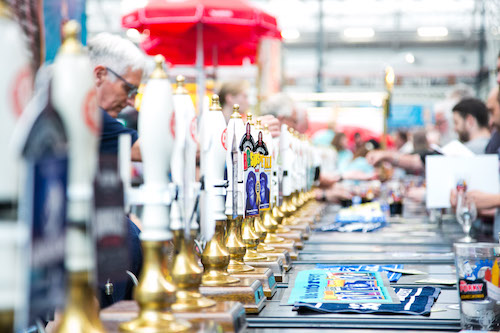
He recommends temperature-controlled cellars, pythons and cooling jackets.
Removing the mystery from the technology, a python is an insulated tube that holds the pipe carrying beer from the cask to the bar with other lines containing cold water or glycol. The python prevents the beer warming on its journey to the customer’s glass.
Nunny also recommends a cooling jacket and cylinder under the bar in order that the beer is cooled further before being served.
John Keeling, former head brewer at Fuller’s in West London and now the brewery’s beer ambassador, is not a fan of under-bar cylinders. He recalls that when Fuller’s launched a golden ale called Discovery it installed cylinders to deliver extra-cool pints.
“But the cylinders knocked the C02 out of the beer, which was then flat in the glass – and customers didn’t want flat beer.”
Nunny thinks the cylinders must have been set too cold and the beer could have been served at an acceptable temperature and with a good head if poured slightly warmer.
Getting the serving temperature right is critical. Fergus Fitzgerald, operations director and former head brewer at Adnams in Suffolk, said: “Too much cask beer is served warm these days. High temperatures lead to flat beer.”
Controversially, he added: “I’m happy to drink cask beer at 8 degrees. After all, it quickly warms up in the glass.”
Nunny, who was a director at Adnams before founding Cask Marque, disagrees with his former colleague. He said cask beer served that cold will have a chill haze, which is as unacceptable to drinkers as warm pints.
Most pubs are now run by pub companies and their role is critical. After a couple of excellent and cool pints in the Mary Shelley I naturally spoke to Wetherspoon for its view on beer temperature.
Jen Swindells said the group has an all-encompassing approach.
“Cellars are cooled to 11 to 13 degrees C,” she said. “Remote coolers are used to regulate cask beer temperatures and they are set between 11 to 14 degrees. Water coolers are set between 7 and 8 degrees. And pythons keep the beer lines cool.”
Jen added that cellars and temperatures are checked every day and technicians are available for call out if a pub has a problem.
While cooling cylinders have their backers and critics, everyone I spoke to is a keen supporter of pythons.
As Eric Idle of the Monty Python team once sang: “Always look on the bright side of life.”
 view events