
Independents capitalise on keeping it local
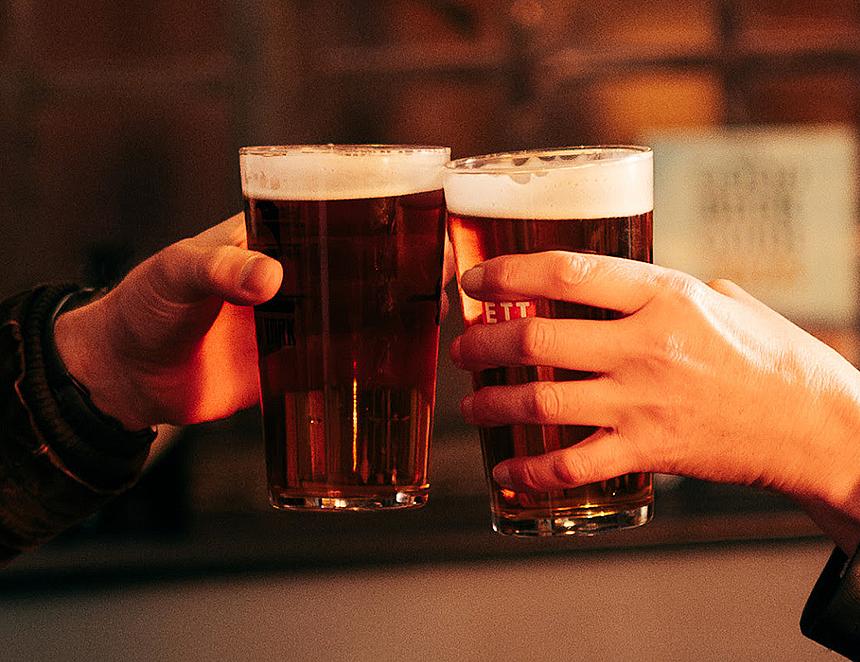
Local roots will win over consumers despite tough trading, according to a new report.
Against the backdrop of record pub and brewery closures, the UK’s small and independent breweries have shown how acting nimbly and capitalising on local roots can win over consumers.
The Society of Independent Brewers and Associates (SIBA) has published its annual report into the state of independent brewing, which found cask sales are holding their own while keg falters.
The report illustrates how breweries have expanded their local offering and are now selling more beer directly to drinkers.
Around half of independent breweries now have a shop (51 per cent) and 46 per cent have a taproom on their sites with a third (33 per cent) selling beer through market stalls and events.
To help manage this expansion, breweries say they intend to create more than 780 jobs this year and more see investment in developing staff as a top priority.
This is in response to growing consumer interest with the latest SIBA/YouGov survey showing that eight out of 10 beer drinkers, along with 89 per cent of 18-24 year olds, say it's important to have a range of beers from small breweries on offer alongside global brands.
And in a positive momentum for the sector, the number of consumers that drink beer has clocked up to 50 per cent in this year's results, reversing the declines seen in previous years.
The majority of the beers made by independent breweries continues to be packaged into cask (58 per cent) with pale ales, bitters and golden ales dominating the top three beer styles.
While only almost a quarter (27 per cent) of beer consumers drink cask, the survey shows it's the best way to engage with consumers.
Four in 10 would try cask beer if they were offered a free sample and 31 per cent would try it if it was made locally. And to demonstrate the importance of advocacy, 43 per cent of drinkers said they would try a new drink if it was recommended by a friend or family member.
Despite this evolving demand, the market remains restricted. While the new report shows that 82 per cent of small breweries can sell some beer to local pubs they report being unable to sell on average to 62 per cent of the pubs in their area due to the dominance of the larger global brewers.
The report also shows that the independent sector remains fragile. Significant pressures – the cost of living, regulation, taxation and overseas uncertainty – are combining and threatening to storm the sector.
Almost half (49 per cent) of breweries say survival is their top priority and nearly a third (32 per cent) expect turnover to fall this year. More than half (53 per cent) of brewers sought no investment last year which saw 137 independents close and a pub a day shutting its doors for the last time.
SIBA chief executive Andy Slee said: “There is no doubt that trade is tough and events are changing rapidly, but small independent breweries demonstrate what successful local community businesses can achieve if they have the right conditions.
“Small breweries are nimble and innovative and want to expand and grow. Consumer interest for their products is there, they just can't always get their beers in front of them.
“Having their own taproom and shop is part of the solution and it's great to see that more are doing so. But it's also important to have the chance for local pubs to put them on the bar and access continues to be too restrictive for most small breweries."
Report highlights:
- 50 per cent of consumers in the UK drink beer, an increase of three per cent on 47 per cent last year. 38 per cent of 18-24 year olds say they drink beer
- 80 per cent of beer drinkers, and 89 per cent of 18-24 year olds, say it is important to have a range of small brewer’s beers on the bar alongside global brands
- mean average production volumes have fallen by 10 per cent in 2025, but the median average grew by 14 per cent. Overall UK beer sales were down 1.8 per cent in 2025 and 8.4 per cent down on 2019
- 51 per cent of breweries have an on-site shop, 46 per cent have a taproom and 57 per cent have a webshop
- 30 per cent of beer is sold directly to consumers and 33 per cent sell through market stalls and events
- almost half (49 per cent) of independent breweries say that survival is the top priority
- Independent brewers report on average being unable to sell to 62 per cent of the pubs in their local markets
- 31 per cent of the indie beer workforce is female including 21 per cent of brewery owners. 31 per cent of breweries say that staff development is a top priority with 18 per cent having or working towards a qualification
- 53 per cent of brewers sought no financial investment last year and 25 per cent of investment was sourced privately through loans from directors or individuals or using personal funds
- keg production decreased five per cent to 19 per cent of average production in 2025. However bottle production increased to 12 per cent and cans to 11 per cent and cask remained steady.
 view events